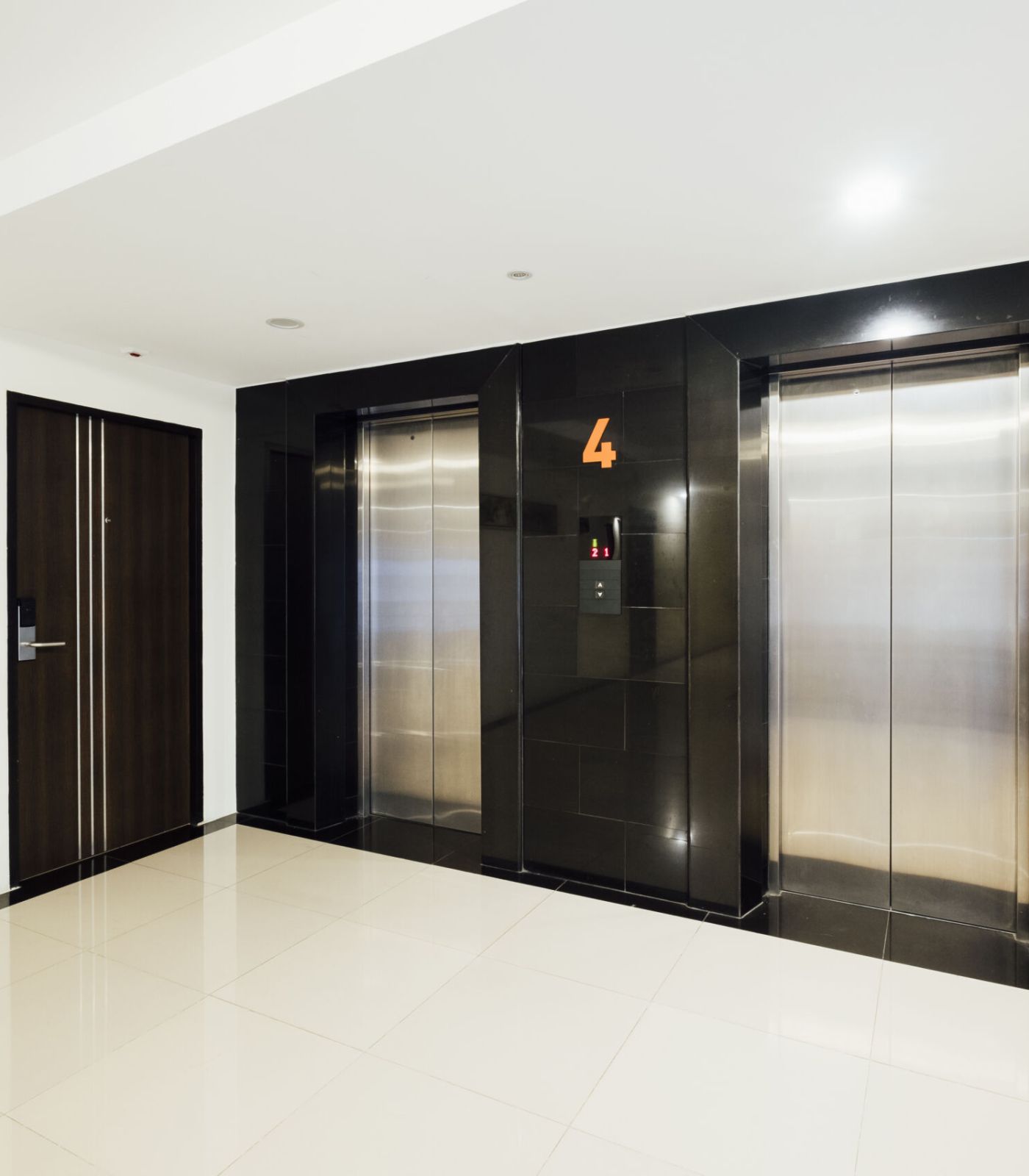

As urban density increases and multi-story private residences become more common across the Middle East and Africa, residential passenger lifts have shifted from a luxury addition to a practical building component. These systems now serve a dual purpose: improving daily mobility within the home while adding long-term value to the property. For architects, developers, and building owners, understanding the technical and design dimensions of residential passenger lifts is essential to making informed project decisions.
What Are Residential Passenger Lifts
Residential passenger lifts are vertical transportation systems engineered specifically for private homes and low-rise residential buildings. Unlike commercial elevators designed for high-traffic environments, these lifts prioritize quiet operation, compact footprint, and integration with interior design. They typically serve between two and six floors and are built to meet the structural and regulatory requirements of residential construction.
Typical Use Cases in Modern Homes
Residential passenger lifts are installed in a range of settings, from single-family villas to duplex apartments and townhouses. Common use cases include:
- Providing accessibility for elderly residents or individuals with mobility limitations
- Connecting private floors in multi-level homes, such as bedrooms, rooftop terraces, or basement levels
- Enhancing convenience in high-end residences where vertical movement is frequent
In regions experiencing rapid residential construction, including Saudi Arabia, Lebanon, and parts of Central Africa, these lifts are increasingly specified in architectural plans from the outset rather than retrofitted later.
Design and Space Considerations
One of the primary concerns for architects working with residential passenger lifts is spatial efficiency. Modern systems, particularly machine-room-less (MRL) designs, require significantly less structural overhead than traditional setups. Shaft dimensions can be as compact as 1,000 mm × 1,000 mm for basic configurations, making them viable even in homes with limited floor area.
Material choices for the cabin, glass panels, brushed steel, wood veneer, are selected to align with the home’s interior design language. The goal is seamless integration, not a utilitarian add-on.
Load Capacity and Performance
Residential passenger lifts typically support loads between 250 kg and 630 kg, accommodating two to five passengers per trip. Travel speeds range from 0.15 m/s to 1.0 m/s depending on the number of floors served and the drive system used. Hydraulic drives are common for low-rise applications, while traction-based systems offer smoother rides and better energy performance for taller residential structures.
Technology Behind Modern Residential Passenger Lifts
The technology embedded in today’s residential lifts reflects broader trends in building automation and energy efficiency. These are no longer simple mechanical platforms, they are integrated systems designed around user experience and long-term reliability.
Smart Controls and User Experience
Modern residential passenger lifts incorporate microprocessor-based control systems that optimize travel patterns, reduce wait times, and enable features such as automatic floor leveling and remote diagnostics. Many systems now offer smartphone-based controls, allowing homeowners to call the lift, monitor its status, or lock access to specific floors through a mobile application.
These smart features are particularly relevant for high-end residential developments where building management integration is expected from the design phase.
Noise Reduction and Ride Comfort
Noise performance is a critical factor in residential installations. Unlike commercial buildings, homes demand near-silent operation, especially when the lift shaft is adjacent to bedrooms or living spaces. Advances in gearless traction motors, vibration-dampening guide rails, and acoustic insulation materials have reduced operational noise levels to below 50 dB in many modern systems.
Ride comfort is also influenced by acceleration and deceleration curves. Premium residential lifts use variable-frequency drives (VFDs) to ensure smooth starts and stops, eliminating the jarring motion associated with older hydraulic systems.
Safety Features for Private Homes
Safety in residential passenger lifts extends beyond compliance with EN 81-41 or equivalent regional standards. Key features include:
- Automatic rescue devices (ARDs) that lower the cabin to the nearest floor during a power outage
- Interlocking door mechanisms that prevent the cabin from moving unless all doors are fully closed
- Emergency communication systems connected to monitoring centers or mobile devices
- Overspeed governors and buffers calibrated for the specific travel height
For home lift installations, these safety layers are non-negotiable, particularly in homes with children or elderly residents.
Residential Passenger Lifts in the Middle East and Africa
The demand for residential passenger lifts in the Middle East and Africa is shaped by distinct construction trends, climate conditions, and regulatory environments. Understanding these regional factors is critical for specifying the right system.
Luxury Villas and High-End Residences
In markets such as Saudi Arabia and the UAE, residential passenger lifts are a standard feature in luxury villa developments. Projects under Saudi Vision 2030 and expanding urban zones in Riyadh and Jeddah are driving demand for high-specification residential infrastructure, including passenger elevators tailored to premium interiors.
In Central and West Africa, including markets like Kinshasa, a growing segment of high-end residential construction is also beginning to integrate lift systems, particularly in gated communities and diplomatic residences.
Adaptation to Regional Building Norms
Building codes and elevator regulations vary significantly across the Middle East and Africa. In Lebanon, residential lift installations follow local building permit frameworks that may differ from European EN standards. In Saudi Arabia, SASO (Saudi Standards, Metrology and Quality Organization) governs lift safety and installation requirements. African markets often reference a mix of ISO, EN, and national standards.
Manufacturers and installers operating across these regions must demonstrate compliance flexibility, ensuring that each installation meets the applicable local code while maintaining consistent safety and performance benchmarks.
Customization for Architects and Developers
Architects and developers working on residential projects require lift systems that adapt to their design intent, not the other way around. This means configurable cabin dimensions, flexible shaft requirements, and a range of finish options. It also means responsive technical support during the specification and installation phases.
FujiLift works with architects and developers to provide tailored configurations for residential projects, including panoramic elevator options for homes with atrium or open-plan designs, and compact solutions for constrained floor plans.
Residential Passenger Lifts FAQ
Do residential lifts require a machine room?
Most modern residential passenger lifts use machine-room-less (MRL) technology, which places the drive system within the shaft or at the top of the hoistway. This eliminates the need for a dedicated machine room, saving valuable space in residential buildings. MRL designs are now the standard for new installations in private homes.
What is the maintenance frequency?
Residential lifts typically require servicing every three to six months, depending on usage intensity and local regulatory requirements. Regular maintenance includes inspection of safety devices, lubrication of moving parts, testing of emergency systems, and verification of door mechanisms. A consistent maintenance schedule extends the system’s operational life and ensures continued compliance with safety standards.
Are residential lifts energy efficient?
Yes. Modern residential passenger lifts equipped with gearless traction drives and regenerative technology consume significantly less energy than older hydraulic systems. LED cabin lighting, standby modes, and VFD controllers further reduce energy consumption. In a typical residential setting with moderate daily use, a modern lift may consume less energy annually than a standard household appliance.
Explore FujiLift’s Elevator Solutions for Your Next Project
Whether you are designing a private villa, a multi-unit residential development, or modernizing an existing property, selecting the right residential passenger lift requires careful evaluation of space, safety, performance, and design. FujiLift offers a complete range of residential and commercial elevator systems engineered for the Middle East and Africa, backed by regional expertise and ongoing technical support. Get in touch to discuss your project requirements with our team.