
As urban density rises across the Middle East, Africa, and emerging markets like Lebanon, Saudi Arabia, and Congo, architects and developers are rethinking how vertical mobility integrates with sustainable building principles. Pneumatic elevators, once considered a niche solution, are gaining traction as a credible answer to the growing demand for low-impact, space-efficient transportation systems. Their unique operating model challenges conventional elevator engineering and opens new possibilities for residential and design-driven projects.
This article examines how pneumatic elevators function, why they align with sustainable architecture, and where they fit within modern construction strategies.
What Are Pneumatic Elevators
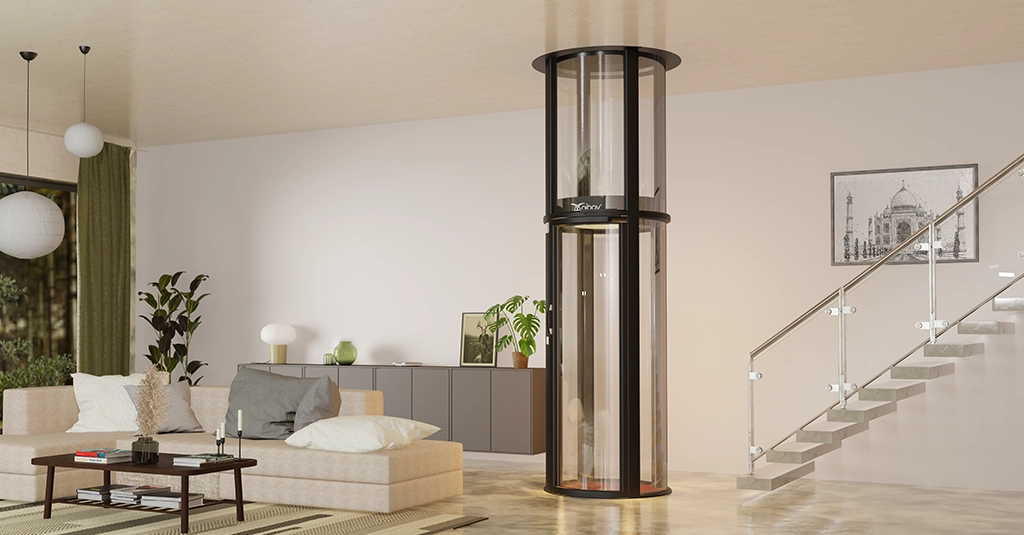
Pneumatic elevators, also known as vacuum elevators, rely on air pressure differentials to move a cabin within a sealed cylindrical shaft. Unlike traction or hydraulic systems, they do not require counterweights, cables, pulleys, or machine rooms. This structural distinction makes them one of the most architecturally flexible solutions available for low-rise applications.
Their growing presence in residential and boutique commercial projects reflects a broader shift toward elevators that combine engineering efficiency with visual integration.
Operating Principles
The mechanism is straightforward. A turbine located at the top of the shaft generates a pressure difference between the upper and lower sections of the tube. When the upper chamber is depressurized, atmospheric pressure below the cabin pushes it upward. Descent is achieved through controlled release of air, allowing gravity to lower the cabin gently.
This single-source propulsion eliminates several mechanical components typically associated with traditional elevators, reducing potential failure points and simplifying long-term operation.
Structural Simplicity
Pneumatic elevators require no pit, no machine room, and minimal load-bearing reinforcement. The self-supporting shaft can be installed directly on the floor slab, which makes them particularly suitable for retrofits in existing buildings where structural modifications are limited or costly.
For architects working on heritage projects in Lebanon or compact urban developments in Riyadh, this flexibility allows vertical mobility to be added without compromising the structural envelope.
Energy Use Characteristics
Energy consumption is concentrated during the ascent phase, as the turbine only operates when lifting the cabin. The descent phase consumes virtually no electricity since it relies on controlled gravitational movement. This asymmetric energy profile makes pneumatic elevators well-suited to buildings with moderate traffic patterns.
In regions where grid stability remains a concern, such as parts of Central Africa, this low and predictable energy demand is a meaningful operational advantage.
Pneumatic Elevators in Sustainable Architecture
Sustainability in vertical transportation is no longer limited to energy ratings. It now encompasses material footprint, embodied carbon, end-of-life recyclability, and integration with green building certifications such as LEED and EDGE. Pneumatic elevators contribute to several of these dimensions simultaneously.
Reduced Material Requirements
The absence of counterweights, steel cables, and hydraulic fluid significantly reduces the bill of materials. The transparent polycarbonate or acrylic tube structure uses fewer raw resources than a conventional shaft built from concrete or masonry. This reduction directly lowers embodied carbon, a metric increasingly scrutinized in sustainable building certifications.
For developers pursuing green building targets, this material efficiency contributes to documented environmental performance.
Low Energy Consumption
A typical pneumatic elevator consumes less electricity per trip than many comparable low-rise systems, particularly because the descent phase is essentially passive. Over a building’s operational lifetime, this energy profile contributes to lower operational carbon, complementing other passive design strategies such as natural ventilation and solar orientation.
In climates like those of the Gulf or West Africa, where cooling loads dominate energy budgets, every reduction in auxiliary equipment consumption matters.
Minimal Environmental Impact
Pneumatic systems do not use hydraulic oil, which eliminates the risk of fluid leakage and the associated environmental remediation costs. Their modular design also facilitates disassembly and material recovery at end of life, aligning with circular economy principles increasingly adopted by institutional developers and public-sector clients.
Applications of Pneumatic Elevators
While pneumatic elevators are not designed to replace traction systems in high-rise developments, they occupy a distinct and valuable segment of the vertical mobility market. Their ideal use cases are defined by building height, traffic patterns, and architectural intent.
Residential Projects
Private villas, townhouses, and small multi-unit buildings represent the primary application. In residential settings of two to five floors, pneumatic elevators offer a discreet, low-maintenance solution that integrates well with contemporary interior design. Their compact footprint preserves usable floor area, which is particularly valuable in high-cost urban markets.
Across Lebanon and Saudi Arabia, where multi-generational housing and accessibility considerations drive elevator adoption, these systems address both functional and aesthetic priorities.
Retrofits and Renovations
Existing buildings often lack the structural provisions for traditional elevator installation. The self-supporting nature of pneumatic shafts allows them to be installed in stairwells, courtyards, or unused corners without major structural intervention. Installation timelines are typically shorter, which reduces disruption for occupants during renovation phases.
This makes pneumatic elevators a practical complement to broader modernization programs in older residential and commercial buildings.
Design-Focused Developments
The transparent cylindrical shaft transforms a functional element into an architectural feature. Designers working on boutique hotels, showrooms, and high-end residences increasingly specify pneumatic systems for their visual transparency and minimal visual mass. The 360-degree visibility creates a continuous spatial experience between floors.
For projects where the elevator is part of the architectural narrative, this integration distinguishes pneumatic systems from enclosed alternatives.
Pneumatic Elevators FAQ
How durable are pneumatic elevators?
Pneumatic elevators are engineered for residential and light commercial use, with typical operational lifespans comparable to other low-rise elevator categories. Their reduced mechanical complexity contributes to consistent performance over time, provided that turbine and seal components are maintained according to manufacturer specifications.
Are they suitable for multi-floor buildings?
These systems are most appropriate for buildings between two and five stops. Beyond this range, traction or machine-room-less systems offer better performance, speed, and capacity. For taller residential or mixed-use projects, pneumatic elevators are typically not the recommended configuration.
What maintenance is required?
Routine maintenance focuses on the turbine, air seals, and cabin sensors. Because there are no cables, counterweights, or hydraulic fluids, the scope of preventive servicing is narrower than for conventional systems. Scheduled inspections remain essential to ensure long-term safety and performance, particularly the integrity of the vacuum seals that govern operation.
Explore FujiLift’s Elevator Solutions for Your Next Project
Whether you are designing a private residence in Beirut, modernizing a boutique development in Riyadh, or planning a new project in Kinshasa, the right elevator system depends on building height, traffic, and architectural intent. FujiLift offers a complete portfolio of vertical mobility solutions engineered for the specific demands of the Middle East and Africa. Contact our team to discuss the most suitable configuration for your next project.